
Intergalactic Catholic Monks Try to Save Humanity
A Canticle for Leibowitz

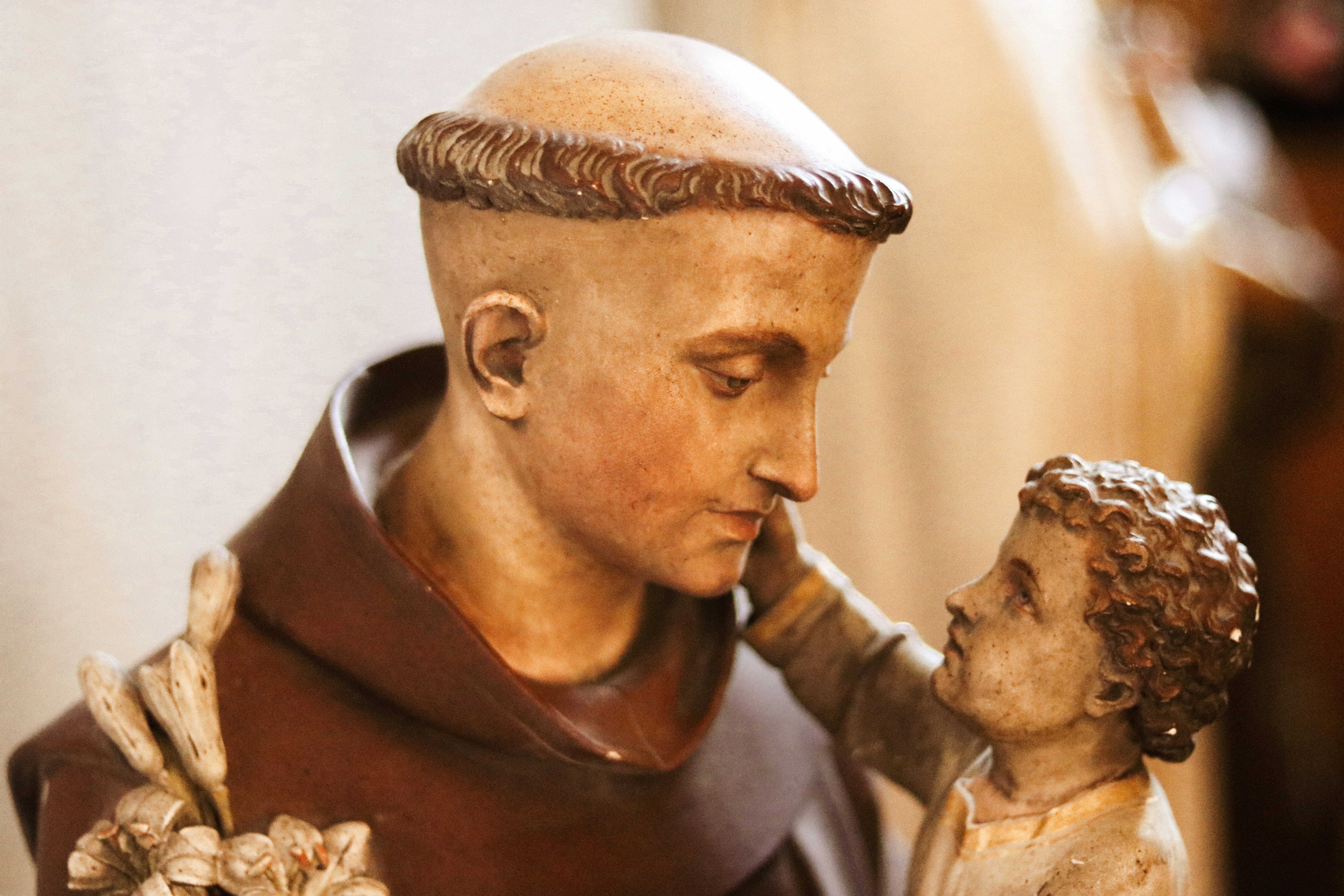
Every now and then you come across a book with a premise so perfectly tailored to your niche interests that you find yourself wondering how on Earth it’s been kept from you for so long and also believing that God must exist if the bookstore is serving up such gifts of providence to you for less than $20.
That’s how I felt when I stumbled across A Canticle for Leibowitz by Walter M. Miller Jr.
My reading interests generally span historical theology, sci-fi/fantasy, and philosophy in both fictional and non-fictional form. In other words, I like books that make me marvel at God, introduce existential despair, and/or feature giant battles in space or magical worlds. By my nightstand you’ll find everything from St. Augustine to Robin Hobb to Camus and Dostoevsky.
And because I like to think I’m a relatively sane person, I wouldn’t expect to someone to roll all of these into one.
But Miller did just that.
The book begins with a fairly simple question:
What Happens After a Nuclear Apocalypse?
Now, especially for science fiction of the 1960s this was far from a unique question. Many writers were considering the dystopian possibilities of nuclear annihilation because they, unlike those of us living today, were still acutely aware of the fact that humanity, in our infinite capacity for stupidity, decided to create weapons that could destroy everyone and everything.
Naturally, that freaked them out.
And honestly, it should freak us out too.
Also like many writers of this period, war was personal for Miller. He was a tail gunner in World War II who took part in over 50 combat sorties, including the controversial destruction of the monastery of Monte Casino. He knew man’s capacity for creating killing fields all too well.
His own life gives us a clue as to how he was able to write this book though, which is truly unique. After the war Miller converted to Catholicism. A Catholic convert with a history of playing a role in the destruction of the oldest monastery in the West writing a book about monks restoring civilization after a nuclear apocalypse must’ve hit close to home for him.
It’s the role of religion that, for me, makes this book truly unique. The book is written in three parts: Fiat Homo, Fiat Lux, and Fiat Voluntas Tua. “Wait a second,” my dear theological nerds are asking, “are you telling me there’s ecclesiastical Latin thrown into this delightful genre-bending cocktail of a book?” Why yes, yes I am.
Each of these parts is separated by centuries, but they all tell the story of monks of the fictional order of St. Leibowitz trying to preserve civilization as it recovers from near-total devastation. But as the book—and society—progresses, they find themselves up against a different kind of dark age. While Fiat Homo explores the dark ages soon after the nuclear destruction and the subsequent rejection of learning that came about as humans rebelled against the knowledge that had brought so much pain, by Fiat Voluntas Tua the world is back to a place where it has the power to destroy itself once more. It’s an age much like our own, where the darkness is not on account of our lack of learning, but our lack of understanding. An age smart enough to build nuclear weapons but not wise enough to know that not all progress is good.
wow, that’s a pretty book cover. But, woah, the image is big. Sorry, didn’t mean to assault your screen with this ad break public service announcement.
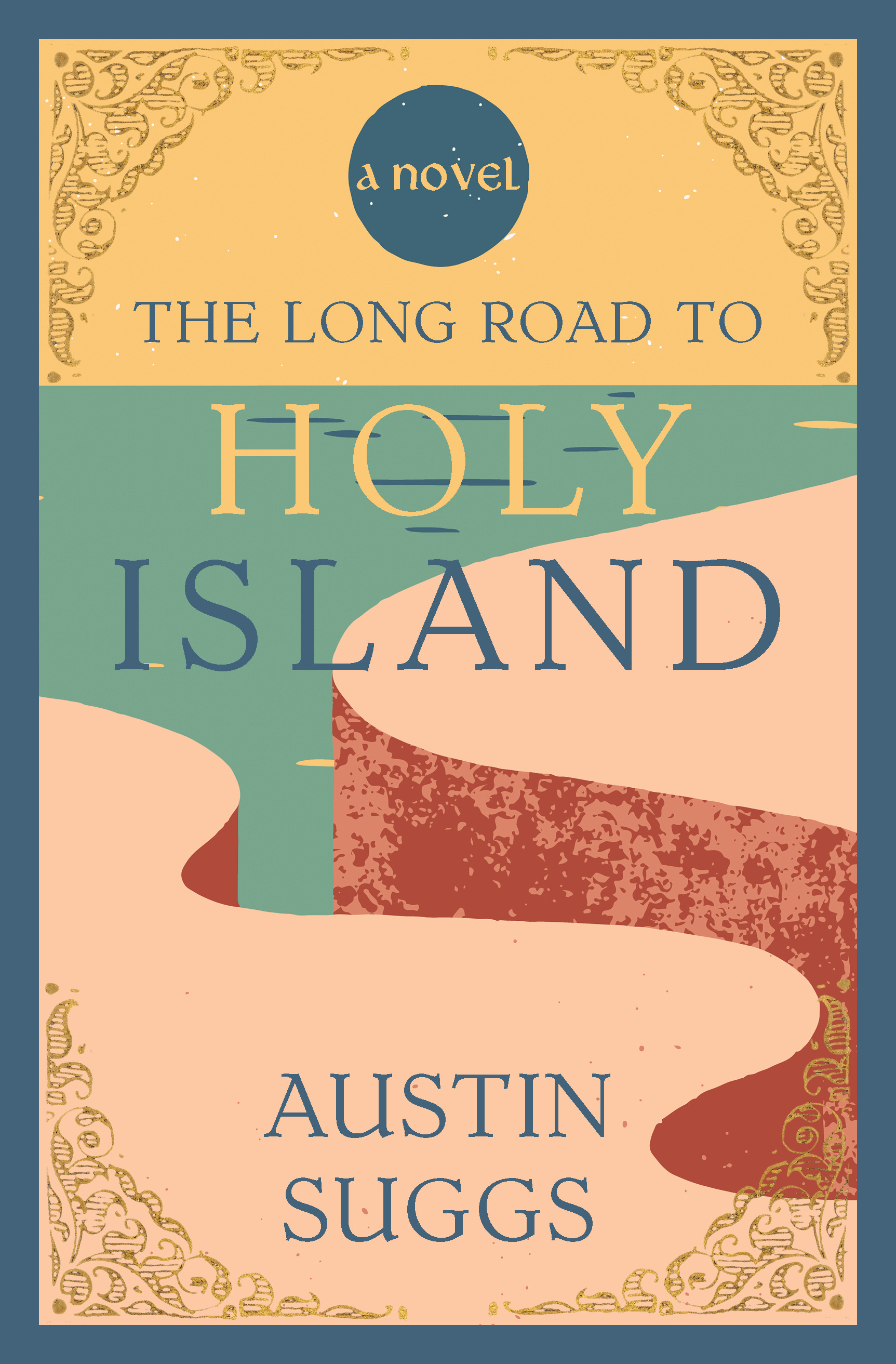
but if you like fiction that explores questions of faith, you might also like my debut novel, The Long Road to Holy Island, which is currently available for pre-order.
Over the course of these three parts, the prophetic voice of the church takes on different tones. In each and every age, we find the church has its own temptations and its own insights to offer.
Along the way, the book forces us to ask delightfully interesting questions like,
Can the Catholic Church Go Interplanetary?
Miller lived not only during a nuclear arms race, but also through the space race. And, without giving any spoilers, it becomes a question in the book, “if life on Earth was wiped out, how could the Catholic Church continue beyond Earth?” What makes Miller’s stand out is that he doesn’t treat these as cursory questions. They’re approached with all the fastidiousness befitting Latin-speaking monks who have a keen eye for canon law.
And yet, he does it, in my opinion, without making the book read like a theological treatise. There are not many long digressions that give the impression that a novelist really wishes they were writing non-fiction. This is not a sermon disguised as a story. Rather, it’s a frightening mirror of our own human capacities for inhumanity projected forward into a world that resembles our own more than we’d like. What’s fascinating, though, is that in this fictional future where much has changed, it’s not just human nature that remains the same. The Catholic Church does too.
Which brings me to another point,
The Book’s Vision of Catholicism
Originally published in 1959, the book imagines a Catholic Church that, at least in the important ways, never changes. In the year 3781, the liturgy is still in Latin. Fundamentally, the Church is a place of conservation. The task of the monastic order, at least initially, was to preserve the remnants of human knowledge in the form of books that survived the “Flood Deluge” (the first nuclear holocaust). Though small things change over time, at it’s core, the church represents a bastion of stability in an unstable world.
In that way, for a book written on the eve of the Second Vatican Council, it seems to me a relic of the pre-conciliar church. To be clear, I don’t mean that with any prejudice. A relic can be a holy object of devotion or a slur toward things that collect dust and rust. For my purposes, I mean it simply to say that the book represents a Catholicism much more marked by the entrenched, defensive view of the church found in, say Lamentabili Sane vs. the outward, world-embracing Gaudium et Spes.
I take it that the Council Fathers at Vatican 2 were not so much trying to leave behind the past or scorn the tradition, so much as they thought the dynamism of the faith had the potential to transform every corner of the world, and, in the same way that Latin and Roman forms of culture had been baptized, so too they believed this was possible with every culture. It was an audacious vision of “catholicity” that implied universality not through having uniformity in every place but embracing, baptizing, and transfiguring the world until Christ was all in all in a universal sense.
But that’s not the only vision of what it means to be Catholic. If we might call that a synchronic universality in which we’re spanning all places at once and embracing the whole, A Canticle for Leibowitz represents a venerable tradition of diachronic universality, that is, attempting to carry one and the same thing in one form throughout time. Thus, we get the Latin Rite alive and well in the 38th century.
I must admit, I find the Vatican 2 vision, or at least my rendering of it, quite alluring. Simultaneously, it hasn’t succeeded (yet). It turns out, the world is not so amenable to baptism. The Council Fathers shot for the moon and perhaps didn’t stick the landing.
Canticle then offers a different picture of the future of the Catholic Church. It remains vibrant 17 centuries from now in large part because it remains the same. The world outside the abbey may rise, fall, and evolve, but the world inside the abbey remains the same in faith and culture. That’s not to say nothing changes in the centuries covered by the book. Some of the world’s changes make it inside the abbey walls. And some of the abbey’s life makes it outside the walls. But, by and large, the church is a fortress, and island, a city on a hill, perhaps, but a walled city.
Sixty years on from Miller’s book, it seems to me that the Catholic Church has taken a slightly different course than he expected. But, if his book tells anything, it is that the church’s story is told over centuries, not decades, and what the future holds is unseen to all of us. However, as Christians, we ought to hope and pray that, for as long as mankind is bumbling about foolishly inside and outside the church, the gospel and the church may continue to witness to a better way. One that doesn’t involve us destroying one another and this fragile earth, our island home.
One of the absolute best! Has informed a lot of my thinking about the place of the Church through the changing of the ages. It is both a beautiful and horrific possible future, and the reality of the 21st century is already different in ways Miller could not have imagined, but in some sense should perhaps have been more able to foresee. Pace the Orthodox, the history of the Church has always been one of adaptation and development as much as fidelity and timelessness.
Thank you for making me want to read this novel again. I read it in the early 80s during high school. It meant a lot to me then. Now I understand why.