


A little over a year ago, I found myself on a plane headed to Dallas for a conversation with Catholic apologist, Trent Horn. It was a whirlwind of a day with a flight out and back separated by only a few hours—just enough time for a dialogue on Catholicism and Protestantism.
We covered many topics, but the one that has stuck with me is a back-and-forth we had over doctrinal minimalism vs. maximalism. As we talked, it became apparent that we had differing intuitions on the relative dangers of the two approaches. I expressed hesitation that doctrinal maximalism created a house of cards. If one makes, say, the Bodily Assumption of Mary, a dogma, does it lead to a situation in which, if you doubt that one doctrine, the whole system comes crumbling down?
That was my concern.
But Trent’s was different. He asked, if you don’t define enough as doctrine, do you risk having a faith so anemic that it can’t be effectively passed on and simply withers amidst the arid climate of modernity?
It was a valid concern.
I don’t wish to relitigate that question here, not least because it would be in poor taste to finish a dialogue with a monologue.1 It does open a different question though, one to which I find myself returning often: What’s the point of doctrine?
What Is Doctrine and Why Do We Have It?
It’s customary to delineate between dogma, doctrine, and opinion. Every church makes some variation of these distinctions. While they might place ideas in different categories or delineate more than three categories, there’s general agreement that not all theological ideas have the same weight. Becoming adept at recognizing the relative weight of an idea is a mark of a mature theologian.
For today’s purposes, when I speak of doctrine, I refer to binding teachings. Now, depending on the ecclesial context, binding can take on different meanings. For some, binding refers to those doctrines which one must affirm in order to be saved. For others, binding refers to those doctrines which one must affirm in order to be a member in good standing of the church.
I have the latter in view. Of course, depending on how tightly you tie ecclesiology to soteriology, you may see this as a distinction without difference—to be a member in good standing of the (true) church is to be saved, you might say. I’ll restrain myself from rehearsing why I think that’s a bad argument, but for now, whether you agree with me on that or not is irrelevant. The point remains in either system: what someone believes becomes a litmus test for inclusion (celestial or ecclesial).
Immediately, though, we run into some problems. Whether one falls in the doctrinal minimalism or the doctrinal maximalism camp, at least some of the binding doctrines tend to be a touch complicated. Take the Trinity, for example. Beautiful as I find the doctrine, I wouldn’t confess to fully understanding it. And I like to think I’ve done more than my fair share of reading on the topic and possess at least a passable level of intellectual horsepower.
No problem, you might say. I can assent to the doctrine without fully understanding it. Leaving aside the nuances of how that works,2 even if I grant it, we run into the fact of many people who, for various reasons, are incapable of assenting to such a notion. Here, I have in view not the non-resistant non-believe—though they are a fascinating class of their own—but rather those who, due to cognitive capacities, are incapable of assenting to such a notion.
When we make Christianity a set of beliefs one must sincerely hold, we risk making it a religion solely of the educated. This problem, I must confess, has largely been out of sight and out of mind for me, but I’ve been pushed on it by a dear friend and brilliant theologian who spends his time, not reading books and filming videos of himself talking about theology, but in caring for disabled children.
People like him give me hope.
Emotionally resonant as such cases are, you might be inclined to say we shouldn’t form rules based on the exception. To that, I would simply say, as much sense as it makes in a vacuum, we worship a crucified Messiah who seemed rather fond of bringing those on the periphery to the center. A parable of the one and the 99 comes to mind.
One way through this is to amend our conception of doctrine from “those things which one must affirm” to “those things which one must not deny.” Affirmation, while ideal, takes a back seat to prohibition against denial.
Another option is to focus less on doctrinal assent as the core of religion and more on action or sacramental participation. James famously said that true religion is caring for the widows and orphans, and, if we take John 6 to speak of the eucharist, life in Christ is tied directly to receiving the eucharist.
However, even if we try to de-center doctrine, it remains the case that Christianity of all shapes and sizes is wedded to doctrine. A doctrinally indifferent Christianity is difficult to recognize as Christianity in any historical sense. There has been a long line of Christian thinking that says doctrine matters, not just for social cohesion, but rather for the more fundamental reason that what we believe about God shapes who we become.
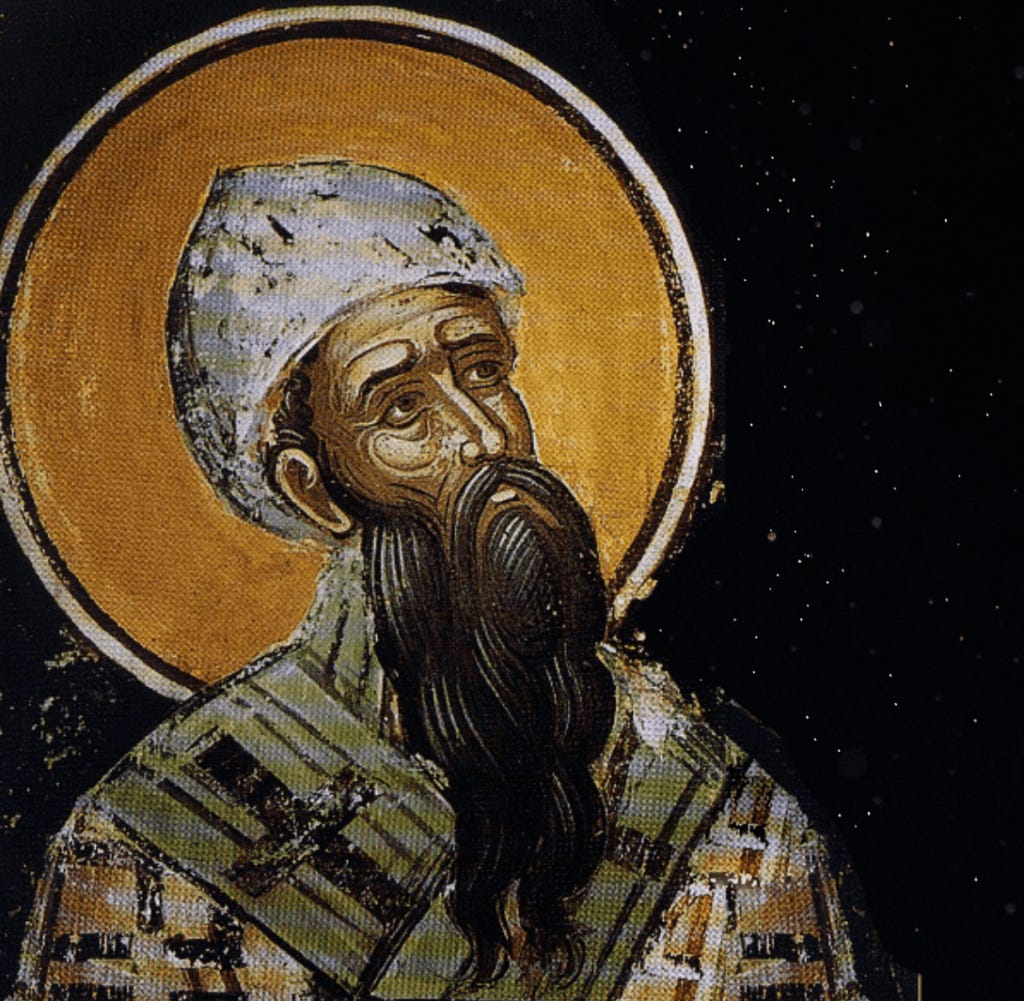
If one reads the Christological debates of the 4th and 5th century, it’s hard to escape the idea that these writers genuinely believed that doctrine mattered. Tempted as we may be to make these debates into nothing more than power struggles, such a proposal strikes me as woefully reductionistic.
When Athanasius sparred with Arius, he thought getting the answer right was a matter of far more than intellectual interest. It was about saving souls. When Cyril of Alexandria fought with Nestorius, he didn’t think this was something they could agree to disagree on. He thought the Christian faith hung in the balance.
I must admit, being far removed from those controversies, while it’s easy to see how the Christian faith as a coherent doctrinal system might have hung in the balance, it’s less easy to muster the same level of conviction that these men had that their interlocutors were agents of Satan.
This gets even more difficult when we move away from the person of Christ and toward doctrines regarding the ideal system of church governance, the liceity and apostolicity of icon veneration, or the precise mode of Christ’s presence in the eucharist. They might all be properly systematic insofar as they are interconnected with other doctrines, but it’s at the very least understandable that people would wonder whether they are, in and of themselves, the type of thing that should serve as a litmus test of belonging, much less salvation.
And yet, perhaps they were never supposed to do that. This, as a matter of passing interest, is another thing Trent and I discussed. For someone on the outside of a robust doctrinal tradition, each binding doctrine appears to be a hurdle that one must overcome to join said tradition. But for those on the inside, they’re more or less just part of the package. They can’t be denied, but it’s not as though they needed to be affirmed one by one on the weight of the evidence.
In this conception, doctrine becomes an ecclesial boundary marker. Inside the boundaries, one need not walk the perimeter and check that each brick is, in fact, in the right place. They simply need to not transgress the boundary. In all likelihood, the believer inside the boundary will find little reason to walk all the way out to the edge, so they might go their whole life without ever seeing the walls they’ve been told exist. Outside the boundaries, however, one cannot help but stare at the walls separating them. And seen from this side, it’s all too easy to ask, “why is that here and not over there?”

It seems almost inevitable that the person on the inside will find the outsider’s preoccupation with the walls peculiar, and that, the person on the outside will be dumbfounded by the seeming lack of care the person on the inside has for the sprawling walls at which they find themselves staring, especially since, in the mind of the outsider, it’s the insiders who decided to put them there in the first place.
Much as I like this metaphor, I must say that seeing doctrine as boundary markers is not a neutral or universal conception. Still working with the metaphor, imagine a castle is surrounded by fields, at the end of which are the walls we’ve been discussing. One way of thinking of doctrine is to think of it as the walls. There is another, however. This way of thinking would allow for doctrines to be the castle itself. The doctrines become the centerpiece. People of this persuasion won’t deny that some doctrines exist at the periphery and could be called boundaries, but they’ll insist that the very center of the estate—the castle—is itself doctrine.
Most every Christian will agree that, at the center of the Christian faith we find the Trinity and the Incarnation. I’ve said many times in the past that all of theology is summed up in a proper understanding of the Trinity and the Incarnation, and everything else is footnotes. Incidentally, I thought I was being clever till I discovered Aquinas said nearly the exact same thing. Alas.
In any case, the question remains, are the Trinity and Incarnation as doctrine the castle, or are they the castle as reality?
For a host of reasons philosophical and practical, I think it’s important that we choose the latter. Doctrine is important, but it’s not—to borrow Kant—the thing in-itself. Easy as it can be to forget, doctrine doesn’t save, Christ saves. As I have often had to remind my over-zealous Protestant friends, the idea is that we’re saved by faith alone not by believing in salvation by faith alone.3 The same goes for doctrine generally. I tend to think we get off on the wrong foot when we think of the New Testament category of “belief” as pertaining primarily to correctness of articulation.
Perhaps I should be careful to articulate what I’m not saying. I’m not saying that having correct doctrine is unimportant or that such an idea is foreign in all circumstances to the words belief/trust/faith. But I don’t think they’re the primary referent. And I think when we make them the primary referent, we run into all sorts of trouble.
So then, what’s the point of doctrine?
I think it’s two-fold. First, doctrine helps us to appreciate the mystery of God. Though doctrine is always incomplete, it can still be analogically true, and that’s far from nothing. We find over and over again in Paul’s prayers in the New Testament that we would grow in knowledge of God. While this knowledge is certainly more than propositional knowledge, it doesn’t exclude the propositional form of knowledge common to doctrine. God desires to be known, has made himself known, and it would behoove us to know him as fully as we can despite our creaturely limitations. This is not primarily because getting the answers to the God-quiz are what saves us, but because to love someone is to know them and to love God is our chief end. To be “transformed by the renewing of our minds” involves, well, our minds.
Second, agreement in doctrine strikes me as an inevitable part of life in community. Now, here’s where I think things are much more difficult. There’s a famous saying, “in essentials, unity; in non-essential, liberty; in all things, charity.” It’s well and good except no one seems to agree on what’s essential. I find myself drawn to an approach that puts fewer things in the “essentials” category and strives to hold together people who may disagree on a load of secondary things. But it is the case that it becomes rather difficult to function as a community when people are holding mutually exclusive views, especially on things of practical import.
As someone in the Anglican Communion, I know this all too well. Despite its “big tent” aspirations, it turns out it’s very difficult to hold together a communion wherein some people believe women can be priests/bishops and others don’t. I take great inspiration from Rowan Williams’s efforts to try to keep people at the table, talking to one another as long as possible. I want to believe that charity can transcend some of our sharpest disagreements. But, at the end of the day, agreement in doctrine goes a long way toward cohesion. Conversely, though, choose to die on every hill and you find a fractured battlefield littered with corpses.
Doctrine, then, is a double-edged sword. Put differently, like every boundary, it’s good at keeping people in and keeping people out. The key is learning to put it in the right places and at the right time.
I suppose, in the end, Trent and I both had a point. Erect no walls, and you end up with trouble from inside and out. Disagreements become difficult to settle, and, furthermore, communal identity can be hard to maintain when it’s not clear who’s in and who’s out. For all the ills of “other-ing” it remains the case that, almost every group identity is maintained by a sense of being “this and not that.” On the other hand, walls are hard to move once put up, and every boundary risks prematurely limiting the territory. I yearn for a capacious Christianity in which brothers dwell in harmony. I hate seeing those confessing Jesus as Lord divided.
And it’s at this point in the article that I find myself grasping for a synthesis as yet elusive.
Side note: On these grounds, I’m not a fan of the YouTube phenomenon of “post-debate debriefs” which seem to inevitably lead to this. If they’re just that—a debrief—or a look behind the scenes, then fine. But this whole, “let’s do a debate and then afterwards, without the debate partner, I’ll explain why I’m right” is a personal pet-peeve of mine. I’ll now step off my soapbox.
Here, I must commend to you Newman’s work, An Essay in Aid of a Grammar of Assent. It truly is the finest work on the subtleties of assent, inference, and certainty that I’ve read. While dense, it is well worth your time.
This is just an illustration. I do not feel like debating the relative merits of sola fide.
Enjoyed this essay. Those are the tensions and they remain in any form of Christianity. I am comfortable in my life in the Catholic Church (as a convert) but clearly those tensions exist in the Catholic Church in its own particular way. The varied reactions to the recent document on Marian titles is a good example .
HE NEVER MISSES! Thanks for sharing this, Austin. You are always a helpful voice in finding the deeper, more fundamental disagreements between different traditions and faith approaches.